

ISO 13485 in Practice
ISO 13485 for Medical Devices: Compliance, Certification, and the QMS in Practice
Quality is our product.
What ISO 13485 compliance actually looks like for medical devices — the QMS, the clauses, the certification, and the daily work that catches everything before it ships.
What the Standard Asks of Medical Device Manufacturers
ISO 13485 is the international standard for quality management systems specific to medical devices, published by the International Organization for Standardization. It’s a written framework, agreed on globally, that defines how a manufacturer organizes the work of building devices safely and consistently.
In ISO 13485-compliant medical manufacturing, every component carries traceability. Every assembly step has documented controls. Risk-based thinking, formalized in the 2016 revision, runs through the design phase, supplier qualification, and the day-to-day decisions on the floor.
The ISO 13485 QMS — What It Actually Looks Like
A Quality Management System (QMS) is the day-to-day expression of the standard. It’s the set of procedures, records, and habits that turn the framework into controlled, quality-driven processes.
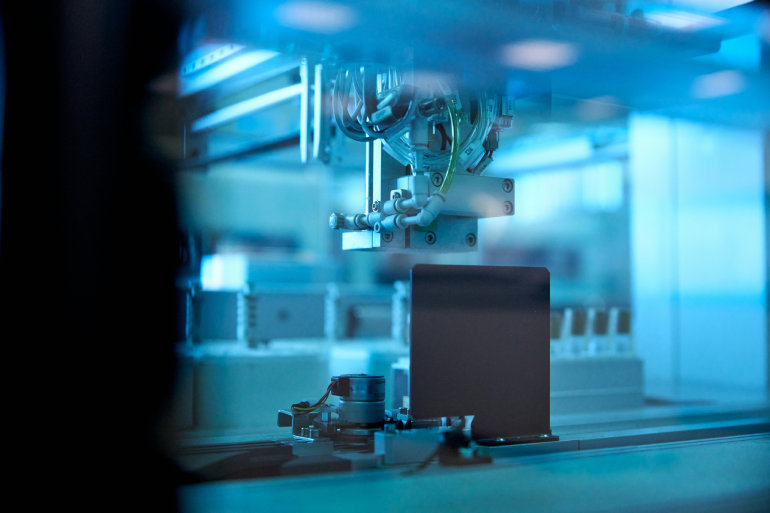
A real ISO 13485 QMS isn’t a binder on a shelf. It’s how operators handle incoming components. It’s how a nonconformance gets flagged and investigated. It’s how equipment gets validated, the cleanroom certified, the documentation maintained.
What lives inside a working QMS:
- Document control. Procedures, work instructions, and forms — current, accessible, and version-controlled.
- Process validation. IQ/OQ/PQ on every piece of equipment that touches a critical operation.
- Receiving inspection. Every component verified before it's released to inventory.
- In-process inspection. Checks at each critical step of the build to ensure quality is being maintained throughout the process.
- Final inspection. Verification of final packaging and labeling before it leaves the floor.
- Continuous correction. Constant feedback from our process back into our QMS to ensure errors are corrected and prevented from happening again.
Where the Catches Happen
A simple question runs through the standard, repeated at every stage: what could go wrong here, and what have we done to prevent it?
That thinking lives in the design review. It lives in PFMEA, Process Failure Mode and Effects Analysis, where engineers and operators sit together and walk through every step of the build, asking what might fail. It lives in the conversation between manufacturing engineering and the operators who’ll run the line, about what’s likely to drift and how the system will catch it.
We’ve seen designs that passed every requirement on paper hit production and start drifting. A flange that bent when the press got under-lubricated. A residue that showed up inside a stainless component nobody had thought to look at. The catches happened because the people doing the work were looking, and the system gave them a way to flag what they saw — long before any device left the floor. ISO 13485 builds that into the structure.

Traceability and Documentation
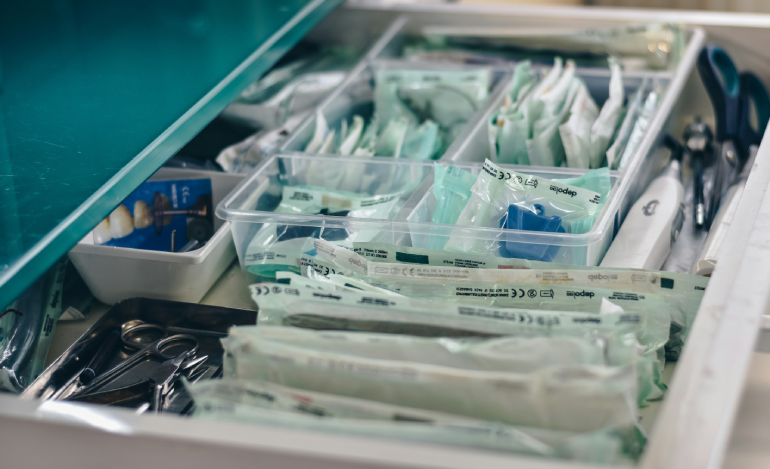
For every device built under ISO 13485, there’s a permanent record:
- The materials used, with lot traceability back to the supplier.
- Training records for every operator who touched it.
- Calibration records for every piece of equipment that measured it.
- Inspection results from every checkpoint.
- Final release sign-offs by Quality.
In 13485 medical manufacturing, the saying goes: if an action isn’t documented, it didn’t happen.
The records aren’t mindless documentation. They’re how the team proves — to itself and its customers — that every step happened, in the order it should have, by the people qualified to do it.
ISO 13485 Certification
ISO 13485 certification is granted by an independent certification body — accredited by ANAB in the US, or by an equivalent national accreditation body internationally — that verifies the manufacturer has built a working QMS meeting the standard. It’s not a one-time test. The certification is audited annually and renewed every three years as the manufacturer continues to operate within the system.
Achieving and keeping ISO 13485 certification means:
- Establishing a QMS that meets every applicable clause of the standard.
- Training the team to operate within the system.
- Running daily operations under the QMS, not around it.
- Reviewing the system continuously to identify and close gaps.
- Demonstrating the discipline holds across years of production, not just the first month.
In the United States, manufacturers also operate under FDA 21 CFR Part 820 — the regulatory backbone of medical device manufacturing here. ISO 13485 and Part 820 cover overlapping territory, and the FDA’s recent Quality Management System Regulation rule harmonizes Part 820 with ISO 13485:2016 so manufacturers don’t run two parallel systems. In practice, a strong ISO 13485 QMS is most of what you need for Part 820 compliance.
For more on the broader regulatory landscape, see our overview of medical device regulatory compliance.
What ISO 13485 Compliance Looks Like in Real Life
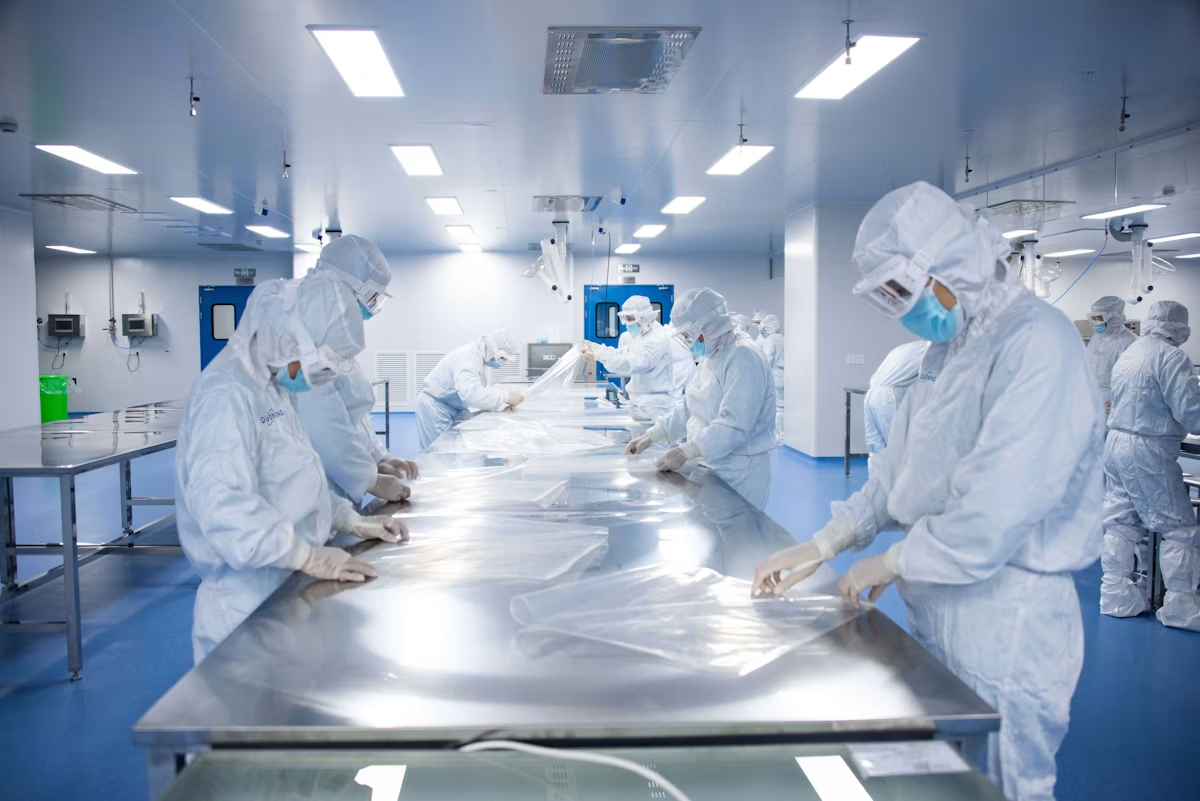
When you see ISO 13485 on a manufacturer’s profile, it means they’ve committed to a way of working. Not perfectly — nobody’s perfect. But carefully, traceably, with the structure to catch mistakes before any device leaves the floor.
For medical device companies choosing a contract manufacturer, ISO 13485 certification is the floor, not the ceiling. It’s a baseline credential. What matters more is how the manufacturer talks about the work — whether they treat their QMS as a living system or a binder on a shelf, whether they show you what they’ve corrected and what they’ve learned, whether the operators on the floor can tell you what their work documents say.
A&M BioMedical has been ISO 13485 certified since 2016. We use our Quality Management System in every process we perform, every day. We understand that it is this structure, this discipline, that protects our patients. We do it for them. That’s what ISO 13485 compliance looks like when the system is real.


Schedule a consultation
Need an ISO 13485 certified manufacturing partner?
A&M BioMedical has been ISO 13485 certified since 2009, with 30+ years of quality-focused medical device manufacturing in Laguna Hills, California. Let’s discuss your program.