
What Medical Device Manufacturers Should Know About Cleanroom Environment Monitoring
Quality is our product.
For medical device manufacturers, a cleanroom monitoring program includes more than routine airborne particle counts. Microbial conditions, personnel practices, pressure differentials, cleaning protocols, and how all of it integrates with the quality management system are integral to maintaining a controlled environment.
Why Particle Monitoring Alone Is Not Enough
Particle counts are the foundation of cleanroom classification. They describe one variable: airborne particulate at certain size thresholds, measured at defined points, at a specific moment in time. They are necessary, but they are not the whole picture.
A cleanroom can pass particle-count requirements and still pose a risk to the product. Microbial conditions can develop. Pressure differentials between rooms can drop. Gowning discipline can erode. Cleaning protocols can miss the disinfectant rotation needed to keep biofilm from establishing on surfaces. Each of these concerns requires a monitoring process, proceduralized, and recorded at regular intervals.
Key Areas to Monitor in a Medical Device Cleanroom
A cleanroom monitoring program for medical device manufacturing typically covers four areas. Each has its own standard, its own sampling cadence, and its own role in protecting the product.
1. Microbial Monitoring
Microbial monitoring verifies that the environment, cleaning routines, airflow, and personnel practices are controlling biological contamination. Areas of monitoring include:
- Active air sampling in product-exposure zones, assembly areas, and other defined risk points during dynamic operations.
- Surface monitoring on work surfaces, tools, fixtures, equipment, and other high-touch or product-adjacent areas, using contact plates, swabs, or other validated methods.
- Personnel training to procedures detailing gowning process and sequence, personnel practices within the cleanroom, and what materials are authorized to be introduced to the cleanroom. People are the largest single source of contamination in any cleanroom so management of these practices is critical.
2. Physical Conditions and Airflow Parameters
A cleanroom must maintain the physical conditions necessary to sustain its classification, from design, to construction, to ongoing verification of the controlled environment.
- Pressure differential between adjacent rooms. A Class 7 cleanroom should hold positive pressure relative to adjacent Class 8 or controlled areas. Continuous monitoring can identify gradient losses before they are out of spec and create cross-contamination risk.
- Temperature and humidity within validated ranges. High humidity levels may impact certain materials, and encourage microbial growth.
- Air turnover rate, commonly referred to as Air Changes Per Hour (ACH), measures how many times the total volume of air in a space is replaced or filtered each hour. Each class of cleanroom has a different minimum ACH requirement that must be maintained in order to meet the particulate limits. The tighter the environmental control, the lower the class number.
3. Personnel Practices and Cleanroom Behavior
Even a well-designed cleanroom can be compromised by poor personnel practices. Gowning, hygiene, training, and movement discipline all play a major role in contamination control.
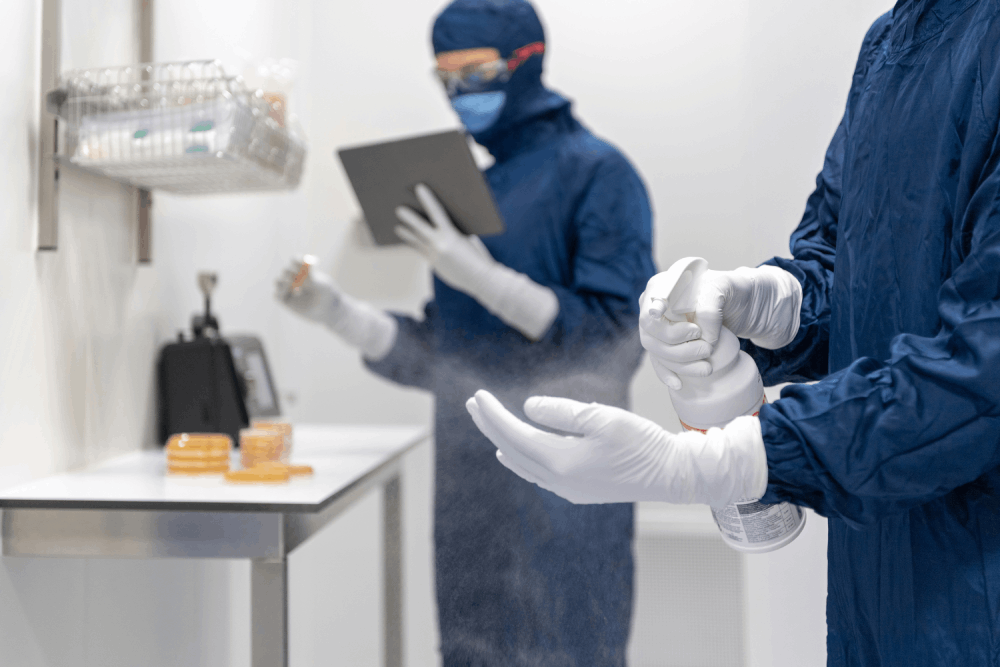
- Regularly reviewed and documented gowning procedures instructing personnel on what PPE is required, how to properly wear it, and the appropriate order of the gowning steps.
- Cleanroom behavior training covering appropriate movement, talking, surface contact, material handling, and hygiene. Refreshed regularly and documented.
- Controlled access through badge readers, interlocks, or documented procedures. Visitor access, maintenance, and material transfers are gated.
4. Cleaning and Disinfection Effectiveness
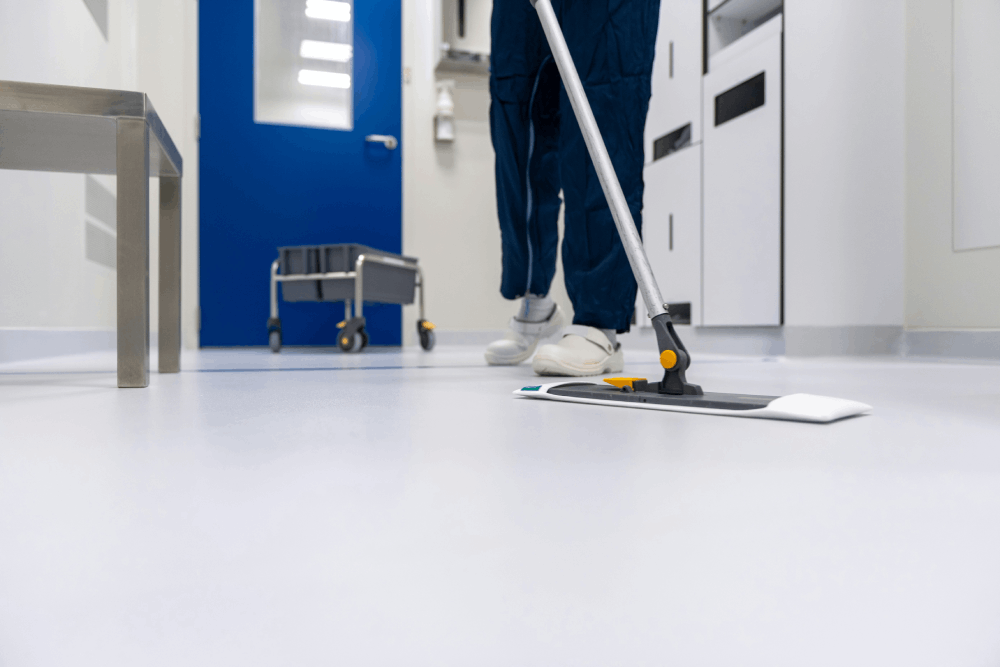
Cleaning and disinfection procedures must be validated, repeatable, and appropriate for the products being manufactured. A cleanroom can meet particle limits and still carry unacceptable contamination risk if cleaning is inconsistent or poorly verified.
- Cleaning verification through microbiological sampling, visual inspection, ATP testing, or other validated methods.
- Disinfectant rotation and residue control to prevent microbial resistance and avoid residues that interact with packaging materials or downstream processes.
- Cleaning records and trend review connected to environmental monitoring results. Microbial or particulate trend increases trigger a review of cleaning practices.
From Monitoring to Control: The Quality System Connection
Collecting cleanroom data is not enough. The value of environmental monitoring comes from how that data is reviewed, trended, and acted upon inside a working ISO 13485 quality system.
- Defined alert and action limits. An alert limit triggers investigation before the action limit is reached. This provides time to address the increase before it becomes a nonconformance. An action limit triggers stop-and-correct. Both limits should be set out in your cleanroom monitoring procedure based on your organization's internal requirements, class of cleanroom, and the appropriate ISO standard.
- Trend analysis. A single reading at the alert limit is one data point. A gradual creep toward the alert limit over a quarter is a trend. Trend reviews catch drift before it becomes a nonconformance.
- Investigation and CAPA procedures. Out-of-spec readings need root-cause investigation, with conclusions documented and the corrective action verified. The investigation closes the loop between monitoring data and product release decisions.
- Correlation with product risk. Environmental monitoring data should be evaluated alongside product-specific requirements: bioburden testing, product cleanliness, sterilization validation, and packaging integrity. The cleanroom data is one input to the broader product risk picture.
What OEMs Should Look For in a Cleanroom Manufacturing Partner
When evaluating a contract manufacturer’s cleanroom program, the following diagnostic questions surface most of what an OEM needs to know.
- What classification is the cleanroom certified to, and how is that classification maintained? Look for documented re-certification on a regular schedule, not just at installation.
- What microbial monitoring is in place (active air, surface, personnel), and at what frequency for each? Frequency should map to the room's classification.
- What does the validation history look like? A new cleanroom can pass an IQ/OQ/PQ. A cleanroom that has run production for years with documented quarterly re-validation demonstrates a lived practice and a commitment to quality.
- What is the trend review cadence, and who reviews it? Quality function ownership matters here.
- What is the nonconformance response procedure? Ask to see a real example (anonymized) of a nonconformance and how it was investigated, corrected, and the correction verified.
- How does the monitoring program integrate with the quality management system? ISO 13485 alignment is the baseline. Partners who treat cleanroom monitoring as a separate facilities function, disconnected from quality assurance and NCR and CAPA processes, are a red flag.
A&M BioMedical's Approach to Cleanroom Manufacturing
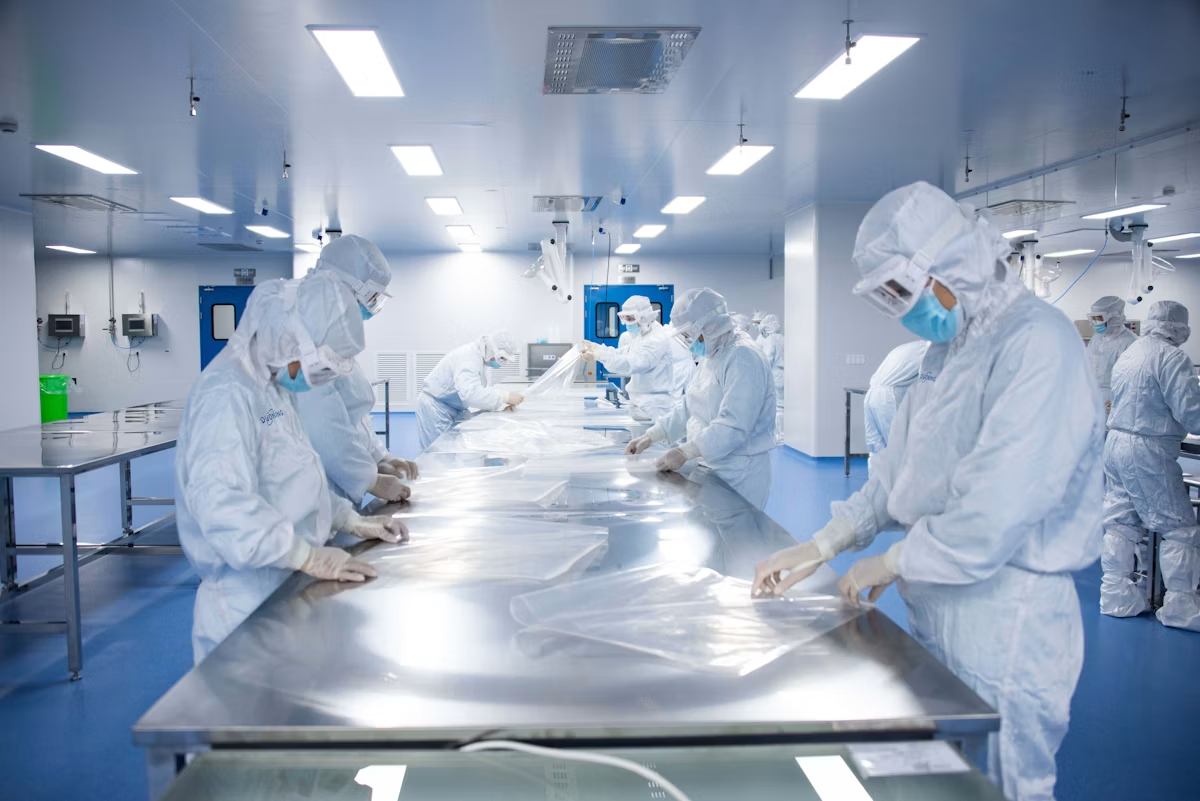
A&M BioMedical operates a Class 7 cleanroom assembly environment at our facility in Laguna Hills, California. We have held ISO 13485 certification since 2009 and have built medical devices for more than 30 years.
Our cleanroom monitoring program covers all four areas outlined above. Microbial sampling occurs per a schedule defined in our cleanroom monitoring procedure. Pressure, temperature, and humidity are continuously monitored so that shifts in any of these parameters can be identified, tracked, and investigated. Thorough gowning practices are utilized and revisited periodically to ensure personnel compliance. Cleaning protocols are documented per shift and per area, with disinfectant rotation managed against microbial trend data. Alert and action limits are set from validation data and reviewed on a defined cadence by the quality function.
Annual certification is the minimum requirement for maintaining an ISO certified cleanroom. Daily monitoring of parameters, documented personnel and gowning practices, and routine quality oversight and review of monitoring data is what ensures the environment is performing as required every day after certification.
Frequently Asked Questions
What is cleanroom environment monitoring in medical device manufacturing?
Cleanroom environment monitoring is the ongoing measurement and tracking of conditions inside a controlled manufacturing space — including airborne particulate, microbial contamination, pressure, temperature, humidity, and personnel practices — to verify the room is sustaining the cleanliness classification it was qualified to.
Is particle counting alone enough to maintain a cleanroom?
No. Particle counts per ISO 14644-1 are one input to the monitoring program. Microbial sampling, physical-condition tracking, personnel discipline, and cleaning protocol verification are all required to keep a cleanroom doing its job for a medical device manufacturer.
What ISO standards govern cleanroom monitoring for medical devices?
ISO 14644-1 (particle counts), ISO 14644-4 (cleanroom design and start-up), ISO 14698 (biocontamination control), and ISO 13485 (medical device quality management systems) are the primary references.
What is the difference between a Class 7 and Class 8 cleanroom?
Class 7 cleanrooms allow no more than 352,000 particles ≥0.5 μm per cubic meter; Class 8 cleanrooms allow up to 3,520,000. Class 7 is typical for sterile barrier sealing and direct device-contact operations. Class 8 is often used for non-sterile assembly and packaging.
How should an OEM evaluate a contract manufacturer's cleanroom?
Ask to see the classification certificate, the monitoring schedule, recent trend data, and an anonymized example of a nonconformance and the resulting CAPA. A serious cleanroom manufacturing partner will have all four ready.

Schedule a consultation
Need a Class 7 cleanroom manufacturing partner?
A&M BioMedical has been operating an ISO 13485 certified Class 7 cleanroom since 2009, with 30+ years of medical device manufacturing in Laguna Hills, California. Let’s discuss your project.