
You have decided to outsource production of your device. Now you are comparing contract manufacturers, and your list of priorities comes down to ISO certification, cleanroom, capacity, commitment to quality, and cost. In today's ever-shrinking, just-in-time world, location might not make your list. However, the proximity of your contract manufacturer to your team can determine how the working relationship functions.
This article covers why proximity still matters when you outsource device production, the questions to ask when you are evaluating a local contract manufacturer, and how the Southern California medtech landscape fits into the decision.
Why proximity still matters
Contract manufacturing is a working relationship, not a handoff. The Customer remains the legal manufacturer of the device, so it stays involved in how each lot is built, inspected, and released. Distance changes how easily, and how often, that involvement happens.
- On-site quality reviews. Assessing a supplier, qualifying a process, or reviewing a first production run is straightforward when you can be on the floor the same morning you decide to go. A manufacturer a few hours away by car is easier to reach than one across the country or overseas.
- Production transfers. Moving a device into production, or between manufacturers, involves documentation, tooling, equipment and process validations. Being on site during that transfer facilitates the transfer of knowledge and continuity, and expedites the process.
- Time zone and response. A shared working day means questions get answered the same day rather than the next. When a build is in progress, a delayed decision can hold up the entire run. A nonconformance awaiting disposition or a deviation that needs sign-off can stop work in process until it is answered. A same-day response keeps production moving.
- Supply chain resilience. A domestic manufacturer removes the customs, freight, and lead-time exposure that comes with overseas production, which has become a larger consideration for medical device companies in recent years.
- A co-located supply base. Building a device is rarely just you and the contract manufacturer. Component suppliers, sterilization providers, and test and validation labs are all part of the chain. In a market as dense as Southern California, those partners tend to sit within the same region, so material moves between them in days instead of weeks, and an issue that spans two suppliers gets worked out without cross-country logistics.
None of this replaces the fundamentals of quality and capability. It affects how the relationship operates once those fundamentals are in place.
Local, domestic, or overseas: what actually changes
Proximity sits on a spectrum, and each step along it trades convenience for something else.
A local manufacturer, within a few hours by car, means you can visit on short notice, run a transfer in person, and stay in the same time zone. This matters while a program is being set up and validated, but also over time. When quality or other issues arise, you can be on site to observe and help resolve them.
A domestic manufacturer in another region works under the same FDA framework you do. Since the 2026 QMSR harmonized US requirements with ISO 13485, the quality system, recordkeeping, and inspection rules are the same ones your company already follows. You stay in the country, though visits require travel time and expense.
An overseas manufacturer may quote a lower piece price, but may not ensure compliance with US regulations and your QMS. You remain responsible to the FDA as the legal manufacturer, while the facility is registered and inspected under its own country's system, subject only to FDA import screening at the border. Material changes, certifications, and documentation requirements can all be more difficult to manage when your manufacturer is thousands of miles away in a different time zone. Freight, customs, time-zone lag, and travel apply to every visit and transfer.
For most medical device companies, the cost of a quality problem, a delayed shipment, or a compliance issue caught late outweighs the piece-price difference. That is the calculation behind choosing a nearby manufacturer, and it is why location belongs at the top of your priority list.
Questions to ask when choosing a local CMO
Location narrows the field. These questions are what actually qualify a contract manufacturer, whether it is down the road or across the country. Ask them of every manufacturer on your shortlist.
- Is your ISO 13485 certification current, and how long have you held it? ISO 13485 certification is the baseline for a medical device contract manufacturer. It means the manufacturer operates a quality system built specifically for medical devices, with document control, traceability, and validated processes. A long certification history tells you the system is a lived practice, not a recent addition.
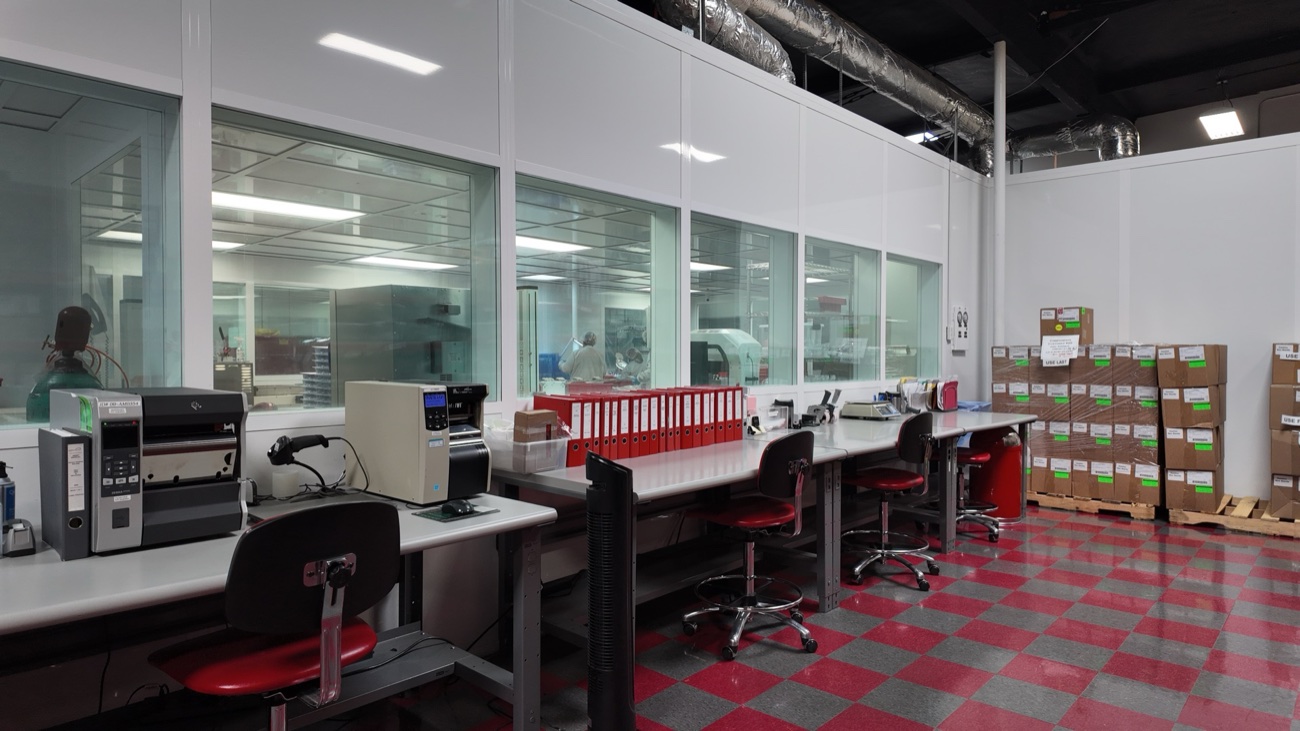
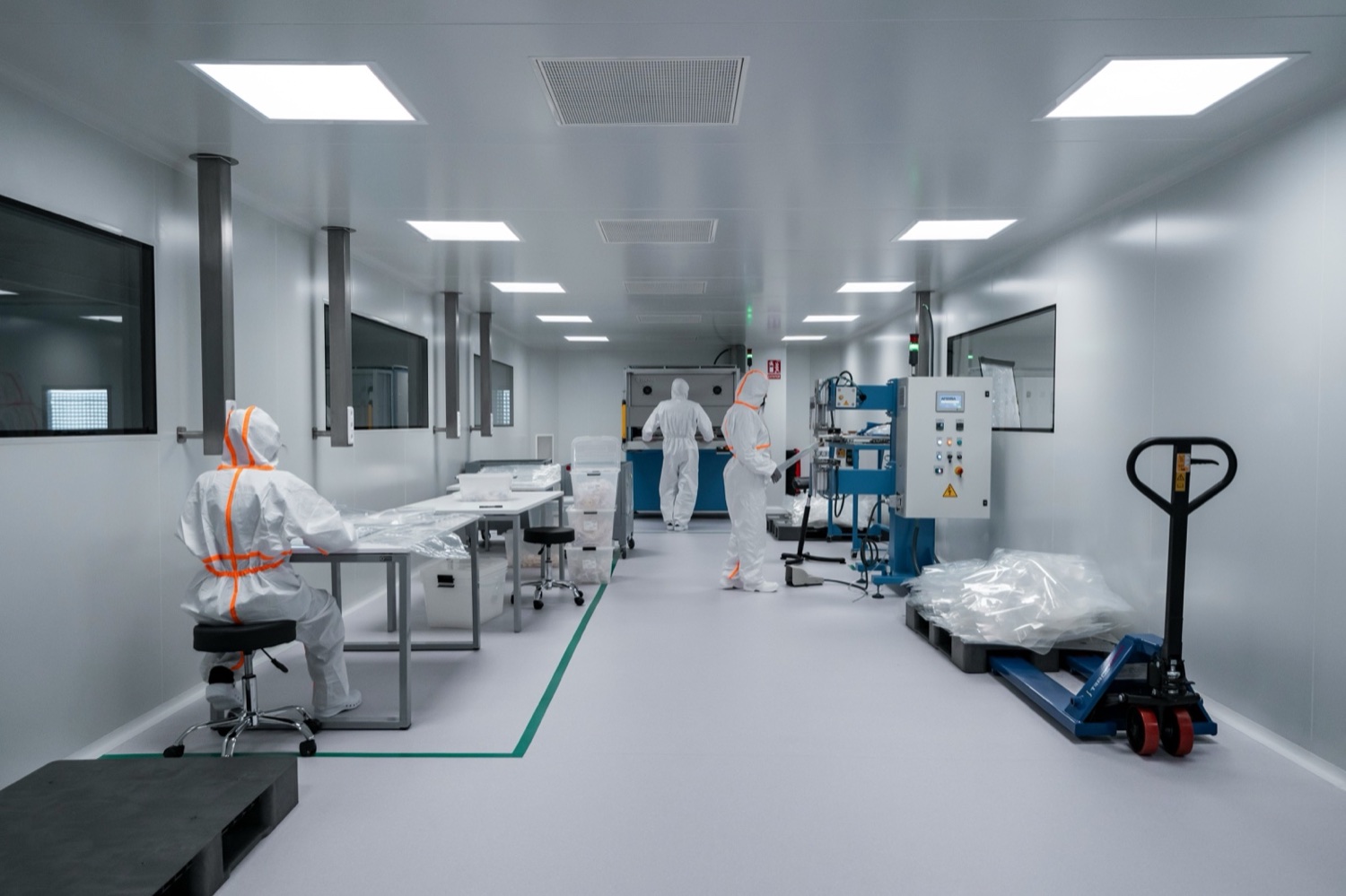
- What cleanroom classification do you operate, and how is it monitored? For devices that require a controlled environment, the cleanroom class (for example, Class 7 or Class 8) has to match your product's requirements. Ask how the cleanroom is monitored and how often it is independently certified.
- Which services do you perform in-house, under one quality system? A full-service contract manufacturer that performs assembly, packaging and labeling, inspection, and fulfillment under a single quality system keeps traceability continuous rather than handing the work between suppliers. This matters most for medical device assembly and packaging, where the record has to stay intact from incoming components through shipment.
- Can you scale from clinical builds to full production? The manufacturer should be able to support your volumes now and as volumes grow. Ask what a ramp from early builds to full production has looked like for a comparable product or project.
- How do you maintain the device history record and traceability? Ask to see how the manufacturer documents each lot and links a finished unit back to its components. The records are what you rely on to release product and to demonstrate compliance.
- Can we visit the floor and review production in person? This is the question a local manufacturer should answer easily. Being able to walk the line, meet the people building your device, and review a production run in person is much of what proximity buys you.
A local manufacturer that answers these well gives you both the operational convenience of proximity and the quality foundation the device requires. A nearby manufacturer that does not is not a shortcut worth taking.
The Southern California medtech landscape
Southern California is one of the larger medical technology hubs in the United States, with a dense concentration of device companies across Orange County, Los Angeles, San Diego, and the Inland Empire. That concentration supports a supply base of contract manufacturers, component suppliers, sterilization providers, and testing labs within driving distance of one another.
For a device company based in the region, working with a nearby manufacturer keeps the supply chain local. Medical device companies in Southern California can qualify a supplier, run a transfer, and review production without long-distance travel. For companies elsewhere, a Southern California manufacturer still offers the advantages of domestic production and a single-time-zone working relationship with the West Coast.
There are established medical device manufacturers in California that specialize in contract assembly rather than building their own product lines. That distinction matters when you are choosing a partner: a pure contract manufacturer works only to its customers' specifications and does not compete with them.
A&M BioMedical: a local contract manufacturer
A&M BioMedical is a medical device contract manufacturer based in Laguna Hills, in Orange County, California. We provide contract assembly, packaging and labeling, inspection, and fulfillment for medical device companies, working to each customer's specifications under one ISO 13485 quality system.
Medical device contract manufacturing is our only line of business. We have held ISO 13485 certification since 2009 and operate a Class 7 cleanroom, with more than 30 years of manufacturing experience and capacity for high-volume production. As a contract manufacturer, we do not design or market our own devices; we build our customers' devices to their requirements and maintain the production records for the work we perform. Because assembly, inspection, and fulfillment run under a single quality system, traceability stays continuous from incoming components through shipment.
Being based in Orange County means customers in Southern California can visit the floor, review a first production run, or work through a transfer in person. For customers elsewhere, the same domestic, West Coast operation supports ISO certified medical assembly in Southern California without the exposure of overseas production.
Location supports the relationship; it does not replace the fundamentals
Choosing a contract manufacturer comes down to the quality system, the capabilities, and the working relationship. Location does not replace any of those, but for a device company that values being able to see how its product is built, and to work closely with its contract manufacturing team to resolve issues, implement changes, and create efficiencies, a local contract manufacturer that meets the fundamentals is an ideal choice. Talk to us about your program.
Frequently Asked Questions
Where is A&M BioMedical located?
A&M BioMedical is located in Laguna Hills, in Orange County, California. Our facility serves medical device companies in Southern California and across the country, and its location makes it accessible for site visits, quality reviews, and production transfers for customers in the region.
How do I choose a medical device contract manufacturer?
Start with the fundamentals: a current ISO 13485 quality system, a cleanroom classification that fits your device, the right services performed in-house under one quality system, capacity to scale, and complete production records. Then weigh the working relationship, including how easily you can visit, transfer a product, and get a response. A local contract manufacturer that meets the fundamentals gives you both.
Does a local contract manufacturer work with startups as well as established companies?
Yes. Contract manufacturing for medical devices supports companies at different stages, from early clinical builds through full production. A device company does not need to have reached high volumes to engage a contract manufacturer; a manufacturer should be able to scale with the program as it grows.